"I am you"
The intention of this assignment was to create an awareness campaign addressing the unseen homeless population throughout Northern Ontario, while encouraging audiences to empathize with and better understand what homelessness in the North can look like. The challenge of the project was to develop a visual solution capable of communicating the reality of homelessness within seconds, while also encouraging viewers to engage more deeply with the issue through education and awareness.
Beyond raising awareness, my personal goal for the campaign was to explore how design could contribute toward a larger, more impactful solution. Rather than focusing solely on shock or sympathy, the project aimed to create a concept that not only educated audiences, but also explored ways design could help support and contribute toward meaningful action surrounding homelessness within local communities.
Design Decisions
My personal challenge within the assignment was to create a campaign that not only raised awareness but also explored a larger, actionable solution capable of directly supporting those experiencing homelessness.
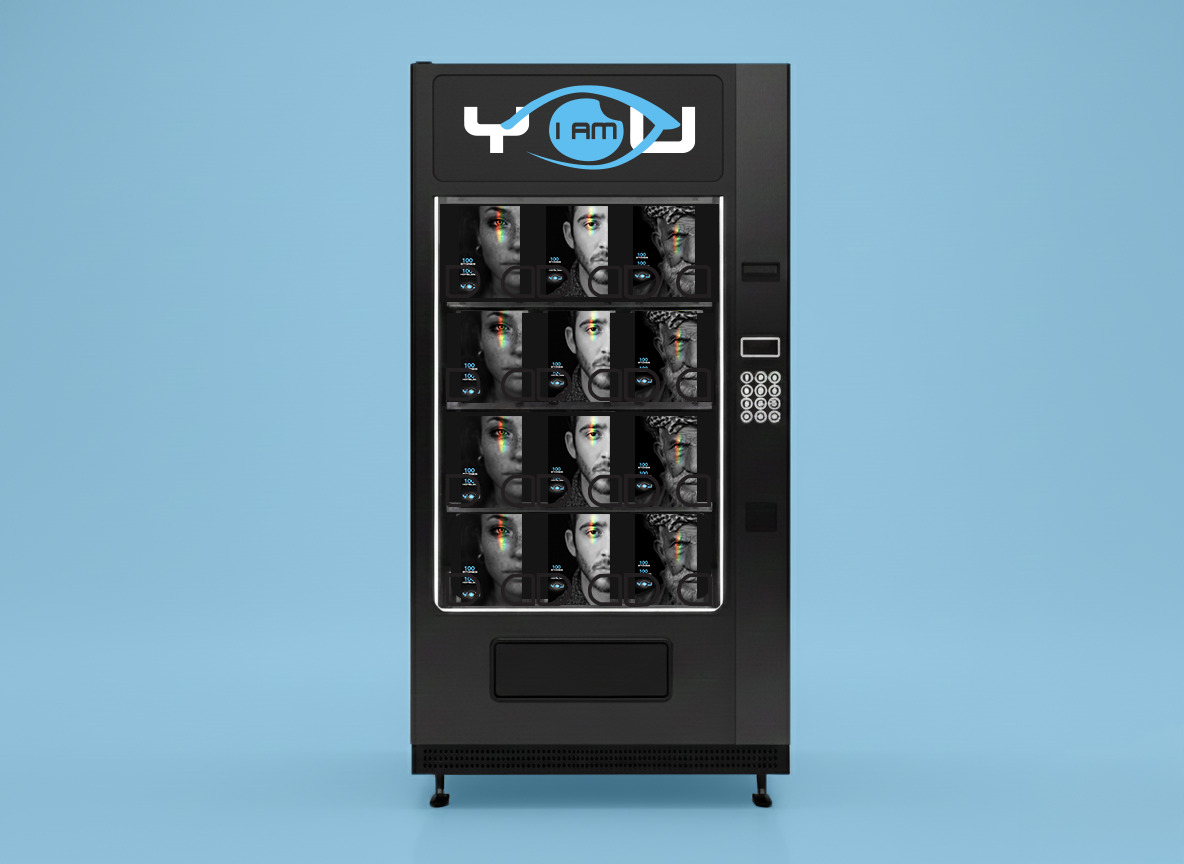
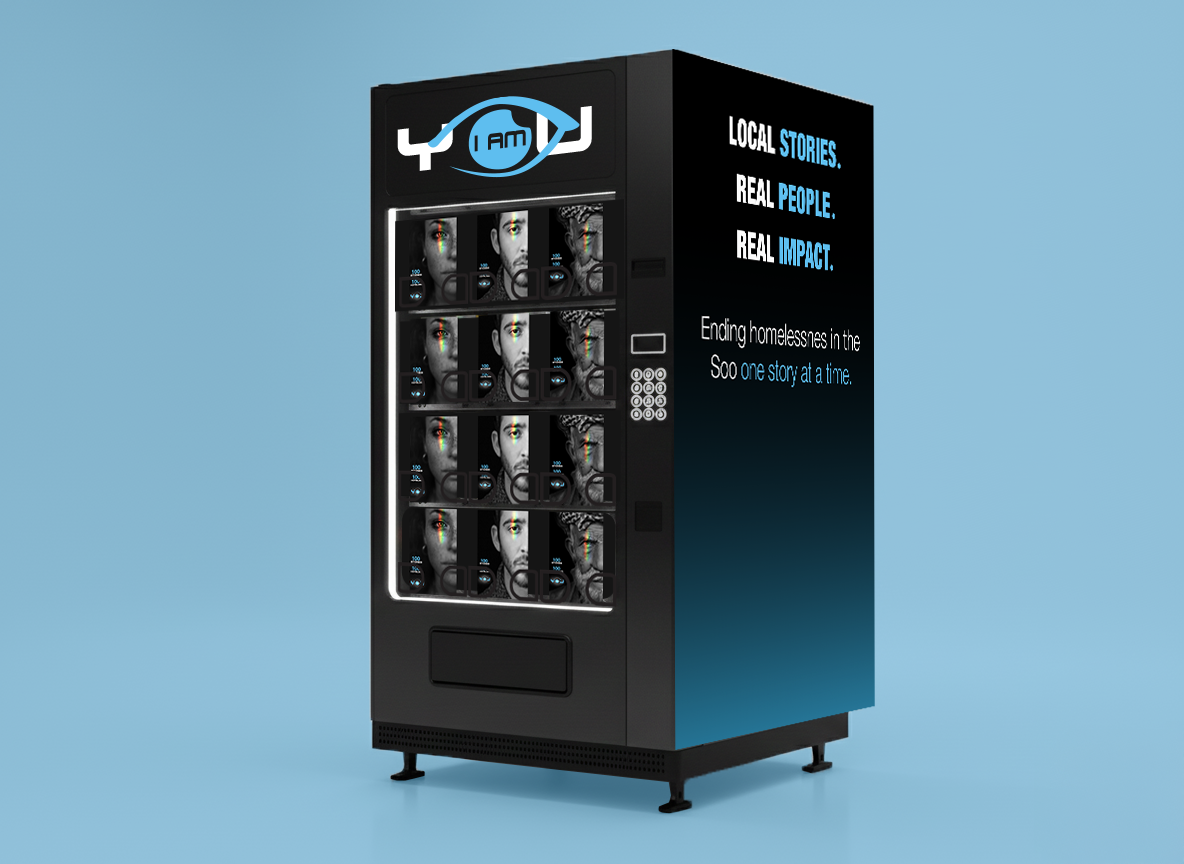
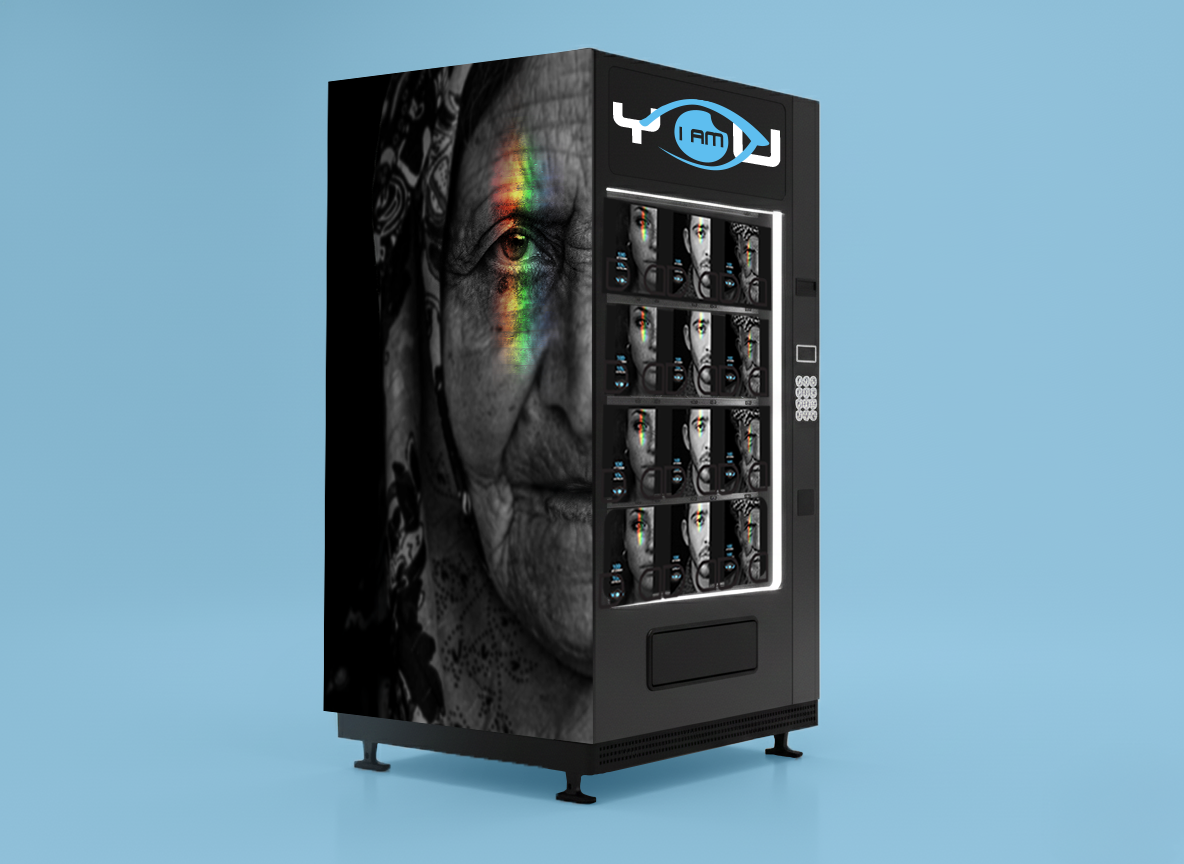
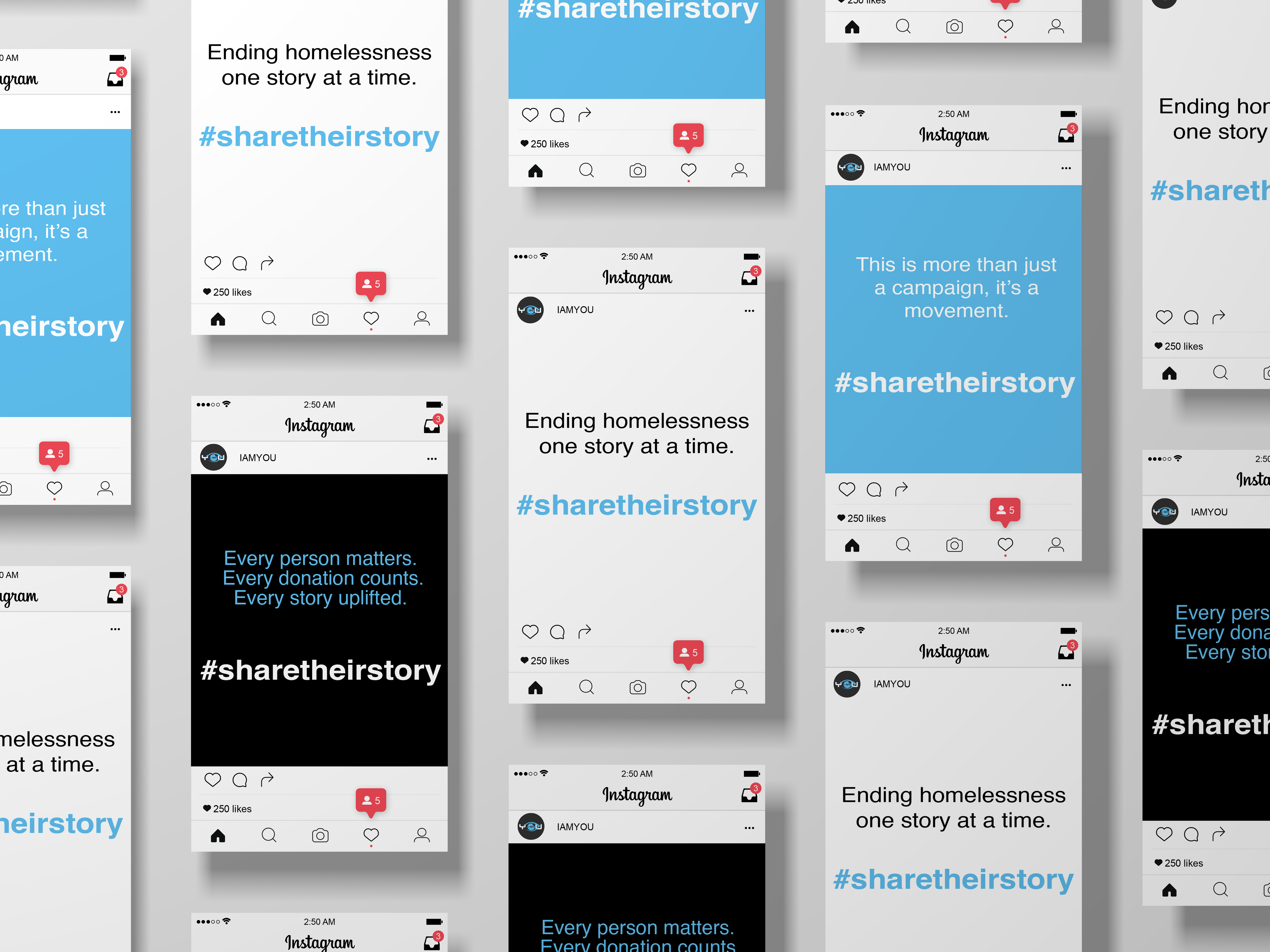
This led to the development of a “give what you can” model that encouraged donations only after viewers engaged with and learned the story of an individual experiencing homelessness. Rather than relying on a fixed donation system, the concept focused on creating an emotional connection before a financial contribution. The project evolved into a vending machine campaign designed to physically place viewers face-to-face with the issue of homelessness within their own community. The vending machine became both the campaign’s advertisement and its central interactive experience, offering a low-cost, movable, and highly shareable approach to public awareness that could naturally extend into social media through the hashtag #sharetheirstory.
The visual direction of the campaign focused heavily on creating an emotional connection through simplicity, gaze, and human proximity. The outer casing of the vending machine was designed to immediately capture attention through partially obscured faces staring directly at the viewer, encouraging moments of confrontation and curiosity rather than passive observation.
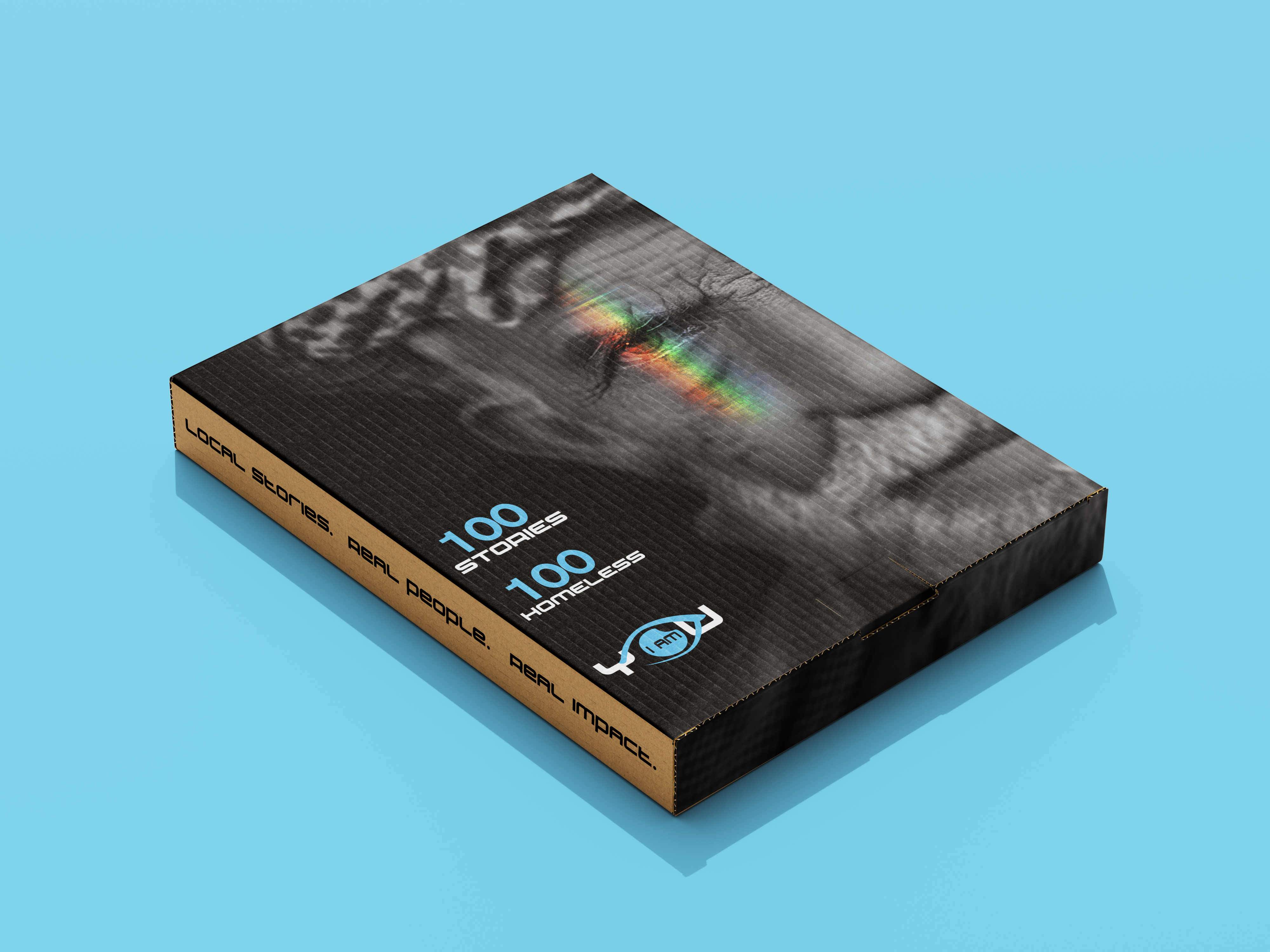
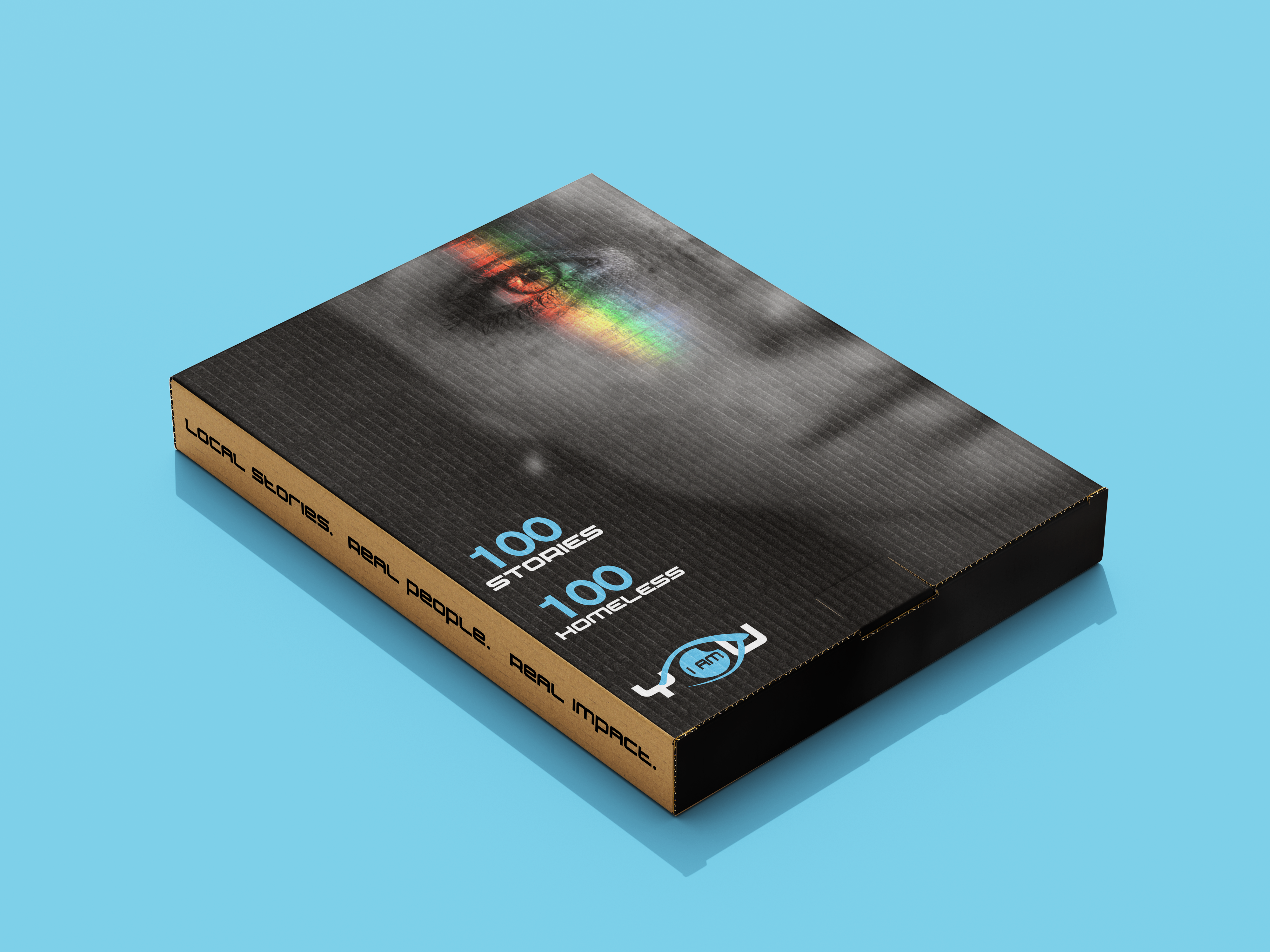
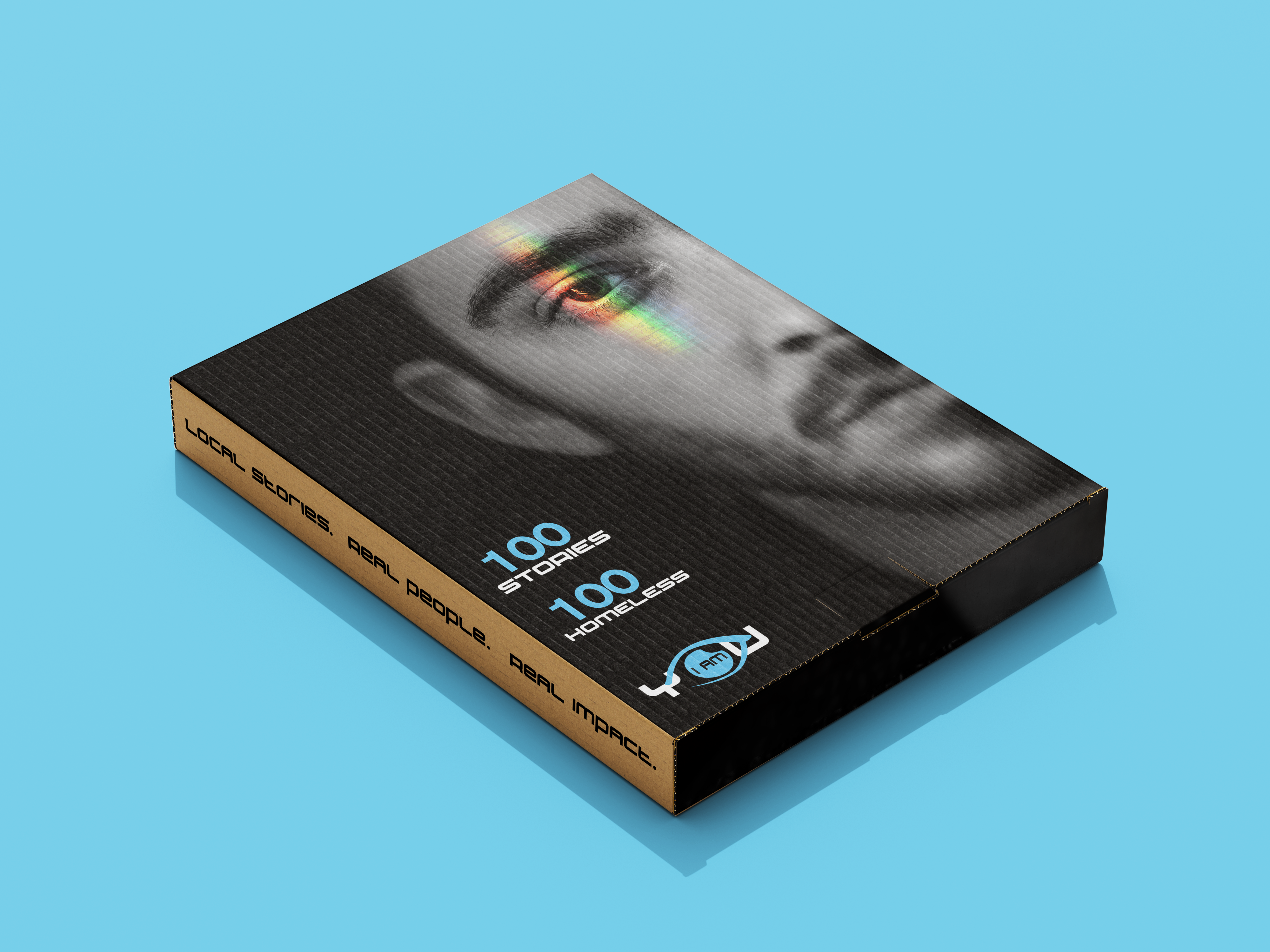
The campaign’s central deliverable, the I Am You story box, was designed to establish a personal connection between the donor and the featured individual. Research surrounding framed proximity and empathetic response heavily influenced the decision to focus on personal stories rather than numerical statistics.
Each box contained an anonymous story written from the perspective of someone experiencing homelessness, highlighting their aspirations, memories, and humanity while protecting their identity. The repeated focus on the eyes throughout the campaign symbolized the idea that the viewer was not looking at a statistic, but at another person. Reinforcing the campaign’s core message that “I Am You.”
Initital Concepts
Final Design
The final I Am You campaign explored how design can create meaningful social awareness through interaction, storytelling, and emotional connection. Coloured lighting surrounds the diverse range of individuals impacted by homelessness, while reinforcing the campaign’s emphasis on humanity and visibility.
The overall visual mood intentionally stripped away unnecessary distractions through the use of blurred monochromatic imagery, restrained colour palettes, and minimal typography. Subtle blue tones and selective colour highlights were used to create emotional contrast while maintaining a calm yet emotionally confrontational atmosphere. Helvetica typography was chosen for most written content to prioritize clarity and accessibility, allowing the stories and message themselves to remain the central focus of the experience.
By transforming homelessness into a physically interactive experience, the campaign encouraged viewers to move beyond distant statistics and recognize the humanity within their own community. Through its conceptual design and hypothetical real-world implementation, the project demonstrates how thoughtful campaign design can educate audiences, foster empathy, and contribute to conversations surrounding meaningful social change.



REAL
IDEAS MADE
kaitlyncutting12344@gmail.com
Location
Ontario, Canada